Somewhere between the fairy lights and the checkout beep, a persistent belief sneaks in: you can always return a shop purchase within 14 days. That little myth, repeated like a carol, sends thousands of people back to counters in December.
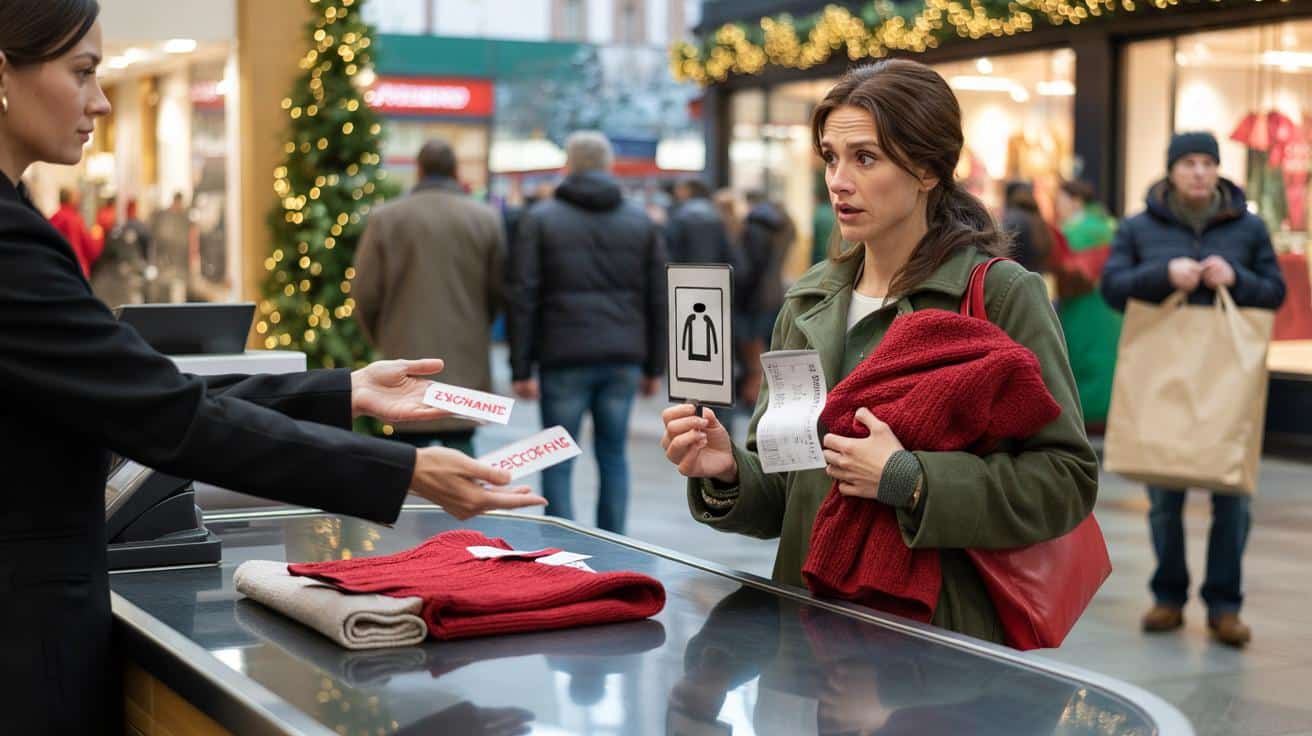
The mall was warm, packed, and humming with carols when I watched a woman clutching a sweater at a Munich till. She smiled, asked for a simple return, and mentioned the “14‑day right” like a magic password. The cashier’s face didn’t budge. Store policy, he said. Exchange only. Voucher if you’re lucky. She shifted, confused, a little annoyed, like she’d misread the script of the season. We’ve all had that moment when you realise the “rule” you trusted isn’t really a rule at all. The line sighed. The sweater stayed. And the myth kept walking the corridors with its shiny promise.
The 14-day legend vs. what the law actually says
In Germany, the “14‑day right of return” repeats itself every December like Last Christmas. There is no general 14‑day right of return for in‑store purchases in Germany. Shops can offer it as a gesture, yes. Some do, some don’t, and many shift to exchanges only during the holidays. That’s not rudeness. That’s the rulebook: in a physical store, your return rights depend on the merchant’s policy unless the item is faulty. It feels counterintuitive because online shopping trained us to expect an easy change of heart window. Brick‑and‑mortar plays by different lines of the law.
Take Lena in Cologne, who bought a scarf “just in case” for a Secret Santa that fizzled. She went back five days later with her receipt and a hopeful smile. The sign by the till said Umtausch bis 10.01.—exchange until January 10—no refunds. She walked out with a voucher tucked into her wallet and a new respect for the small print.
Here’s the split: the famous 14‑day period is the Widerrufsrecht, the right of withdrawal, and it covers distance and off‑premises contracts—online orders, phone sales, doorstep deals. Only distance and off‑premises sales trigger the 14‑day Widerruf. In a shop, you see the item, hold it, choose it. The law treats that choice as deliberate. Your remedies in store kick in when something’s defective, not when you simply changed your mind. That confusion—Rückgaberecht vs. Widerrufsrecht—is the heart of the seasonal headache.
How to shop smart in December—and still sleep at night
Ask the return policy before you pay, then capture it. A quick photo of the sign at the counter, a note on your receipt, the staffer’s name—tiny steps that make disputes melt. If the store offers “exchange until mid‑January,” get it in writing or stamped. When you’re gifting, request a gift receipt and keep tags on until the swap moment. This isn’t about being paranoid; it’s how you buy yourself options.
Know your safety net for defects. German law gives you a two‑year Gewährleistung for faulty goods, with the first 12 months weighted in your favour on the burden of proof for consumer goods. If the toy’s motor dies or the headphones crumble after a few days, you can ask for repair or replacement, then a price reduction or rescission if that fails. Let’s be honest: nobody really does that every day. But come Christmas, that calm script—repair, replace, then refund—can save a gifting disaster.
Faulty goods are a different story: you have statutory rights. Price reductions or “no exchange on sale items” signs don’t erase those rights.
“Kulanz is kindness, not law,” as one Berlin store manager told me. “We like happy customers. We also need clear rules.”
- Ask: “Do you offer returns or exchanges over Christmas?”
- If yes, request it marked on the receipt: “Return until 10.01., unopened, with receipt.”
- Keep packaging pristine and tags attached for non‑fault returns.
- Use card or app payment so your purchase can be traced if the receipt vanishes.
- For hygiene‑sensitive or sealed items, expect stricter rules—opened often means no go.
The little print that makes a big December difference
Store policies are promises, not laws, and they live in details. Some chains extend returns to 30 or 60 days over the holidays. Others switch to exchange‑only to protect margins on fast‑turnover gifts. A small sign that reads “reduzierte Ware vom Umtausch ausgeschlossen” can turn a casual swap into a no. If you need flexibility, shop where the policy is generous and clear, or buy online to activate the legal Widerruf. If you’re already holding the wrong size sweater, go friendly and specific: ask for “Kulanz,” propose a size exchange, and have the item looking sellable. One sentence can help more than a speech: “Could we exchange this after Christmas—ideally for a voucher if the size’s gone?” It’s pragmatic, human, and it works more often than you’d think.
There’s a reason the “14‑day” idea feels true. Online returns trained us to believe shopping comes with an undo button. Reality is softer, more local, and often negotiable. And that’s strangely empowering when you know the ground beneath your feet.
| Point clé | Détail | Intérêt pour le lecteur |
|---|---|---|
| — | No general 14‑day right for in‑store purchases in Germany | Avoids wasted trips and awkward counter debates |
| — | 14‑day Widerruf applies to online/off‑premises sales | Lets you choose online when you need guaranteed flexibility |
| — | Defective goods trigger statutory remedies (repair/replace/reduce/refund) | Gives a clear action plan when gifts fail |
FAQ :
- Do I have a legal 14‑day right to return store purchases in Germany?No. That 14‑day window is the Widerrufsrecht for distance and off‑premises contracts. In store, returns are a store policy—unless the item is defective.
- What if the store says “exchange only” or “no refunds” over Christmas?That’s permitted for change‑of‑mind cases. You can still request goodwill (Kulanz), but the store can set conditions like vouchers or deadlines.
- Can I return reduced or sale items?Often no for change‑of‑mind if the sign says so. If the product is faulty, your legal warranty rights still apply regardless of discounts.
- I lost the receipt. Do I have any chance?Some stores can find the sale via card or loyalty account, yet they don’t have to. Bring a bank statement and the intact product; ask politely for an exchange or voucher.
- What about hygiene items, sealed electronics, or custom goods?Expect stricter rules. Opened hygiene‑sensitive goods and bespoke items are commonly excluded from voluntary returns, even at Christmas.