Frost on the windshield. Breath fogging the air. A key turns, the engine coughs awake, and a tiny plume rises into the street. In Germany, that familiar morning habit—letting the motor idle to “warm up”—can cost you far more than a few minutes of fuel. It can cost you a fine right outside your front door.
Somewhere two doors down, an engine droned like a sleepy lawnmower, steady and stubborn, clinging to life in the cold. A neighbor scraped glass with one hand and thumbed his phone with the other, little flakes of ice catching the light like glitter.
I could smell the faint, sweet note of petrol mixing with breath and coffee. A police car rolled past, unhurried. The officer slowed, looked once, then twice. Everything in that moment felt routine, except the sticker on the window a few minutes later. One small habit, big consequences.
Why “Motor warmlaufen lassen” bites your wallet—and your engine
It’s not just a bad look, it’s against the rules: in Germany, letting your engine idle without moving falls under §30 StVO—unnecessary noise and avoidable emissions. That little warm-up ritual many swear by can draw a fine that stings, often cited at €80 in the current Bußgeldkatalog. The sting lands exactly where you live, because that’s where idling happens the most: on quiet residential streets where sound carries and neighbors notice.
Ask around and you’ll hear the same story. Sabine in Hamburg had the motor running while she attacked the windshield with a scraper, heater on full blast, kids buckled in, the whole winter ballet; the ticket tucked under her wiper read €80. German motoring clubs estimate idling consumption at roughly 0.6 to 1.0 liters per hour for modern cars, so ten minutes robs you of around 0.1 to 0.17 liters—plus around 230 to 400 grams of CO₂. Small numbers add up when the habit repeats five mornings a week, four months in a row.
There’s also the mechanical truth nobody likes to hear: cold idling warms an engine badly. Combustion is incomplete, oil stays thick, fuel can wash cylinder walls, and soot builds up in exhaust systems that never reach proper temperature. Catalytic converters and particulate filters wake up faster under gentle load, not while the car shivers in place. Driving off calmly warms an engine faster than any driveway idle ritual.
Morning tactics that beat the fine and the frost
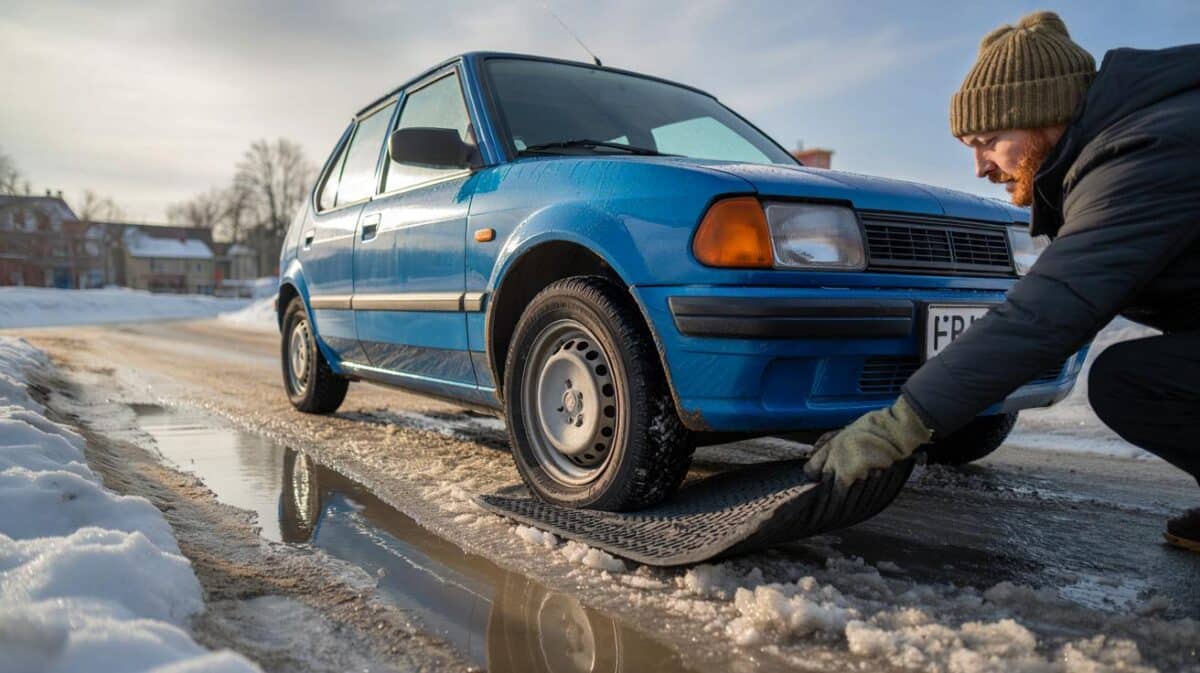
Here’s a rhythm that works: cover your windshield at night, then peel it off in seconds, or spray de-icer and scrape with a sharp, clean blade; clear all windows and mirrors, then start the car, set the blower and rear defroster, buckle in, and roll away smoothly within moments. Seat heaters and steering-wheel heaters deliver fast comfort with minimal draw. Short, low-rev driving loads the engine just enough to bring oil and exhaust up to temperature quickly.
Skip the risky shortcuts. Don’t pour hot water on glass, don’t run wipers over ice, and don’t let the car sit alone while it hums; theft loves unattended engines. If you have a garage, use it; if you can park under a carport or against a wall, you’ll dodge the heaviest frost. We’ve all lived that moment when the clock says go and the glass says wait, which is why planning the night before beats panic at 7:12. Let’s be honest: nobody does this perfectly every single morning.
Talk to a seasoned mechanic and the advice is blunt.
“Let it idle, and you’re burning fuel to make noise,” said a Cologne technician I met last winter. “Drive off gently, and everything gets warm the right way—fast.”
- Keep a proper scraper and de-icer spray in the door pocket.
- Use a windshield cover or a simple fleece blanket clipped under the wipers.
- Warm yourself, not the street: seat and wheel heaters first, cabin heat later.
- Consider an auxiliary heater (Standheizung) or EV preconditioning on shore power.
- Clear all windows fully; move within a minute, low revs, smooth throttle.
The law on your doorstep, the neighbors by your side
The fine is only part of the story. Street mornings are social, even when nobody talks: we share the air, the silence, and the routines we choose to normalize. Swap the idle hum for the brisk scrape of a plastic blade and you’ll hear more birds, fewer grumbles, and maybe even a hello. Your wallet stays heavy, the law stays out of it, and the small cloud outside your door disappears.
The legal basis is clear—§30 StVO bans avoidable noise and fumes—so officers don’t need to guess intent when they hear an engine droning for no reason. Insurers don’t love it either: if a thief takes the opportunity while your car runs unattended, you may face difficult questions about negligence. A tiny tweak to your routine leans toward care, not risk.
There’s also the tech angle. Modern engines are built for clean combustion at temperature, not for a slow, sooty wake-up. Electric cars solve this in a different way: preheat on the cable, step in, go. Hybrids and plug-ins sit in the middle. The theme is the same—warm the cabin smartly, then move.
Pick any street in January and you’ll see the spectrum: the idler with the fogged-up cabin, the careful scraper who moves within a minute, the garage-door whisper that spits a car out warm. The difference isn’t money, it’s method. One small habit, one big difference for your street.
| Point clé | Détail | Intérêt pour le lecteur |
|---|---|---|
| Idling is illegal under §30 StVO | Fines commonly cited at around €80 for “unnecessary noise and avoidable emissions” | Avoid a morning ticket on your own doorstep |
| Engines warm faster while driving | Gentle load heats oil, catalyst, and DPF more effectively than stationary idle | Quicker comfort, less wear, fewer deposits |
| Better winter tactics exist | Scraper, de-icer, windshield cover, seat heaters, auxiliary heater or EV preconditioning | Warm cabin, clear view, and zero legal risk |
FAQ :
- Is it illegal to let the engine warm up in Germany?Yes. §30 StVO forbids avoidable noise and emissions, and warming the engine at idle counts. Expect a fine around €80 if caught.
- Can I run the engine briefly to defrost?You may start the car after you’ve cleared your windows and then drive off promptly with the blower on. Don’t sit and let it idle in place as a “warming” step.
- Are remote start apps allowed?If they start the engine without you in the car, you risk the same violation and potential insurance trouble if the vehicle is taken. Remote preheating that doesn’t run the combustion engine—like an auxiliary heater or EV preconditioning—is the safer route.
- What’s best for a diesel on icy mornings?Start, wait a few seconds for stable idle, then drive gently at low revs. Keep load smooth so the DPF and catalyst reach temperature quickly, and avoid long idling that breeds soot.
- Do auxiliary heaters and EV preconditioning avoid the ban?Yes. A Standheizung or electric preconditioning warms the cabin without running the engine, and EVs can heat while plugged in. That’s exactly the kind of smart warming the law doesn’t target.