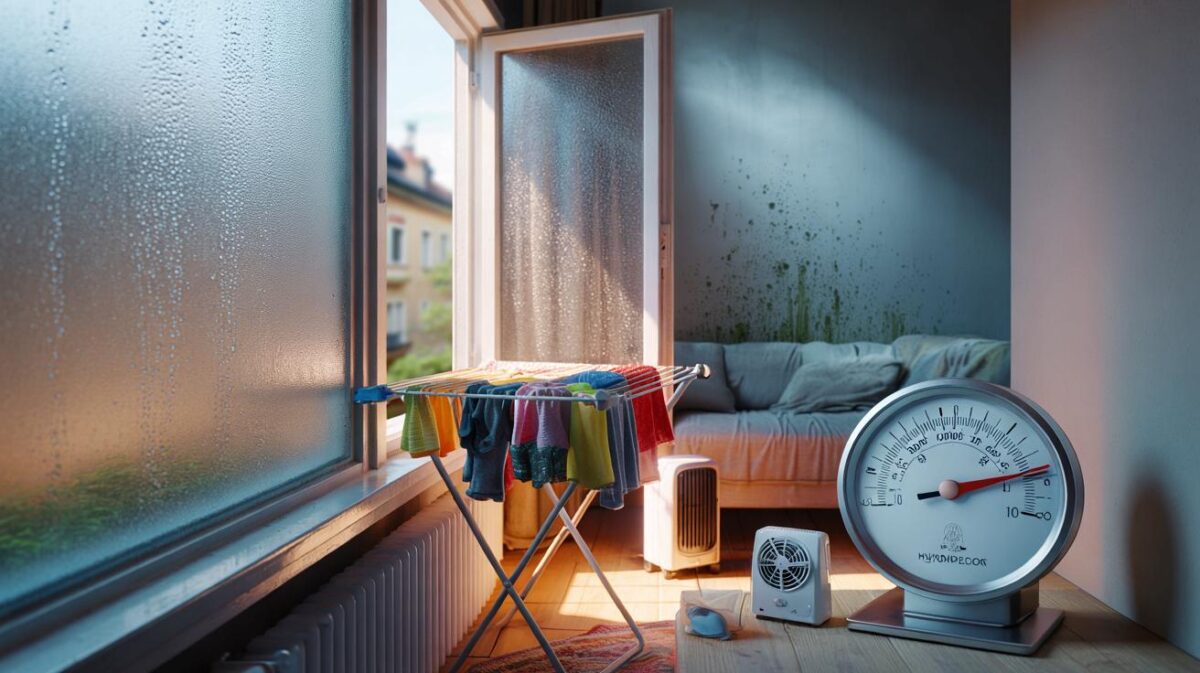
Outside, winter has settled in; inside, a radiator hums and a single window sits innocently on tilt. It feels like the gentle way to air a room. It’s also the fastest way to burn money without flame.
The kitchen clock clicked past 7:30 when I noticed it: a thin, stubborn thread of cold streaming from the tilted window, the boiler grumbling in protest. The room felt “fresh” yet never quite warm, that strange in-between that keeps you in a sweater even next to the radiator. I touched the wall by the frame, and it was almost damp with chill. The culprit sat at a 15-degree angle.
Why the tilted window devours heat
Look closely at a winter room with a tilted window, and you can almost see the invisible loop. Warm air rises to the top of the glass, slips out, and pulls icy air down along the pane, across the floor, and back to the radiator that must fight it again. It’s a treadmill for your heating system. **Heating a room while a window sits on tilt is like burning cash.**
In one Berlin apartment I visited, the tenant swore by “Kippstellung” to avoid drafts. Her bill told a harsher story: hours of heat bleeding away, leaving the walls colder every day. She started getting black spots behind the wardrobe by January. Not a coincidence. When surfaces cool, moisture clings, and health costs join the energy costs, quietly and stubbornly.
The physics is simple and unforgiving. A tilted window doesn’t just swap air; it cools the building fabric, which then soaks up more heat later. Thermostatic valves near the window “think” the room is cold and pump harder, yet comfort doesn’t improve because the cold sink never stops. **Cold walls are the silent budget killer.** Once walls drop a few degrees, you pay twice: first to reheat the air, then to rewarm the mass.
What to do instead: ventilate fast, not forever
The fix is not complicated. Open the window fully, create a cross-breeze if you can, and let the stale air leave in one clean rush. Five minutes in a small room, up to ten in a larger one, then close tight and let the surfaces stay warm. Open wide, breathe, close fast.
Turn the thermostat down a notch while airing, shut interior doors, and pull curtains fully open during the day so sunlight warms the reveal. Use a CO₂ monitor as a simple cue: when it creeps above ~1000 ppm, it’s time. Let’s be honest: nobody really does that every day. So anchor it to rhythms you keep—after cooking, before bed, when you make coffee. Tiny routines beat good intentions.
You may worry that opening wide “wastes heat,” yet it’s the opposite. Quick exchange refreshes the air without chilling the walls, which are your thermal battery. When they stay warm, comfort returns fast and the boiler rests. **Ten minutes of fresh air beats ten hours of a sneaky draft.**
“Air the room like a pit stop, not a picnic: in, out, done.”
- Open windows fully, not on tilt
- Cross-vent if possible, 5–10 minutes max
- Thermostats to low while airing, then back
- Doors closed to keep heat zones stable
- Watch for condensation, not just temperature
The unseen cost—and the comfort you can win back
We’ve all had that moment when the room feels both chilly and stuffy, and we choose the “gentle” tilt to avoid a blast of cold. That habit is why bills swell. Air quality improves while radiant comfort collapses, and you end up heating longer for the same warmth. The math makes sense only until the invoice arrives.
There’s a different feeling when you try the fast exchange. The room clears, the walls stay friendly, and the radiator doesn’t grind all day. Mornings start easier, clothes dry faster, even the kettle seems quicker because you’re not fighting a cold shell. Tiny shifts add up: vents open fully, schedules trimmed to minutes, drafts turned from permanent to purposeful.
Think of your home as a living system with rhythms. Moisture comes and goes with showers, cooking, breathing; heat behaves with the same stubbornness. Respect the rhythms, and your energy line bends lower without heroics. No gimmicks, no gadgets required—just actions with timing. The tilted window asks for nothing, and takes everything.
Evidence in the details: where the money actually goes
Every hour in tilt is like leaving the fridge door ajar: not catastrophic in a minute, ruinous as a routine. Heat streams out in a quiet, continuous trickle that never gives the room a chance to stabilize. That steady drain is what spikes consumption, not the short blast of cold from a proper airing.
| Point clé | Détail | Intérêt pour le lecteur |
|---|---|---|
| Tilt = constant heat loss | Creates a continuous draft loop that cools walls | Explains why rooms feel cold despite high thermostat |
| Shock ventilation | Open wide 5–10 minutes, cross-breeze, then close | Fresh air without chilling the building fabric |
| Moisture control | Warm surfaces prevent condensation and mold | Better health, fewer repairs, lower bills |
FAQ :
- Is the tilt position ever okay in winter?Only for very short intervals in mild weather. In real cold, it cools surfaces and drives costs up fast.
- How long should I air a room?Small rooms: ~5 minutes wide open. Larger rooms: up to 10. Cross-vent if you can, then close fully.
- Won’t opening wide waste heat?No. The quick exchange changes air without draining heat from walls and floors, so comfort returns quicker.
- What about night-time?Skip tilt all night. Air before bed and after waking. If you need fresh air, open fully for a few minutes.
- How do I reduce mold risk?Keep surfaces warm, avoid long tilt, ventilate after moisture spikes, and leave gaps behind furniture on exterior walls.