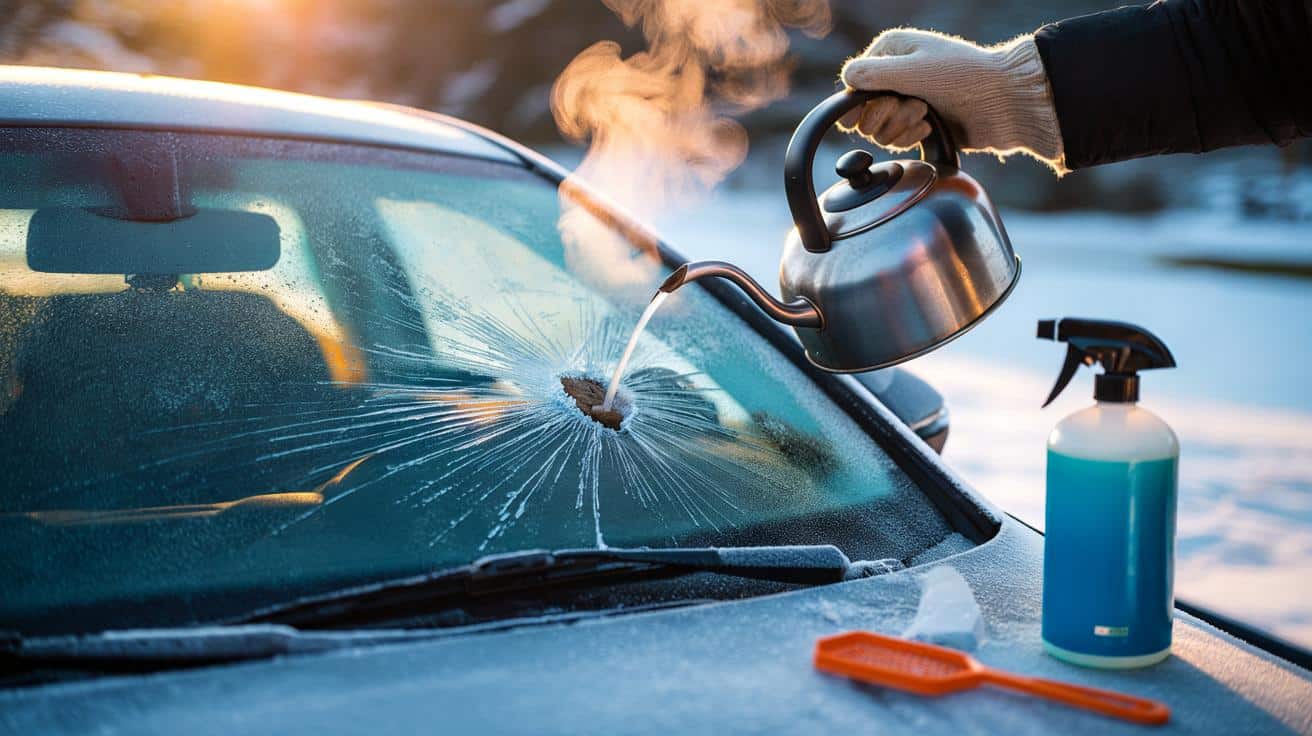
You’re half awake, kettle steaming in your hand, breath fogging the air as the windshield glares back like a frozen lake, hard and dull. The quick fix whispers to you: splash, swish, done. You can almost hear the sizzle before it happens, a tiny sound followed by something worse, a hair-thin line snaking across glass and a day already off the rails. You stare, baffled, as the ice melts, then instantly re-freezes, like a trap resetting. The car feels older than it was ten minutes ago. The urge to pour is real; the damage is, too.
The glass remembers.
Hot water, cold glass: the crack you don’t see coming
Hot water looks like mercy on a brutal morning, yet glass hates sudden change with a quiet fury. When boiling or near-boiling water hits a sub-zero windshield, the outer surface swells fast while the inner layer stays locked in winter. That mismatch pushes and pulls at the edges, right where tiny chips and invisible scratches live, turning a harmless frost into a costly fissure.
A neighbor once tried the kettle trick in a hurry, a regular weekday rush turned into a slow-motion cringe. There was a soft pop, then a silver line spread from a corner like a crack in ice on a pond, graceful and deadly. She didn’t slam the cup down; she just watched the damage bloom and wondered how something so simple could be so unforgiving.
Your windshield is laminated: two layers of glass around a plastic interlayer, bonded under heat and pressure. The outer pane takes the thermal shock first, expanding while the inner pane and the edges lag behind, piling up stress along the perimeter and around old stone chips. Glass expands roughly a whisker per degree, but multiply that by a 70–90°C jump and you’re in the zone where tension meets weakness, and weakness usually wins.
No-scrape mornings: what actually works
The safe route is boring, methodical, and quicker than it sounds once it’s a habit. Start the car, set the defroster to low heat, fan on medium, and fresh air, then walk around with a soft brush to clear loose snow before ice bonds tighter. Spray a de-icer (store-bought or DIY: two parts isopropyl alcohol, one part water, a few drops of dish soap), wait a minute, and use a plastic scraper in smooth vertical strokes. **Hot water is the fastest way to turn frost into a crack.**
Plenty of morning mistakes come from panic and cold fingers. People crank max heat at once, stab at the wipers, or attack the glass with a bank card, all of which add stress where you don’t want it. We’ve all lived that moment when the clock wins and the car is still a snow globe. Let’s be honest: nobody does that every day.
There’s a quieter ritual that keeps glass safe, and it starts the night before, not the minute you’re late. Keep a windshield cover in the boot, switch to winter washer fluid, lift wipers before a big freeze, and park nose to the sunrise when you can. Small, unglamorous steps beat dramatic fixes.
“Glass doesn’t crack because it’s weak,” an old-school fitter told me once. “It cracks because we shock it, then ask it to pretend nothing happened.”
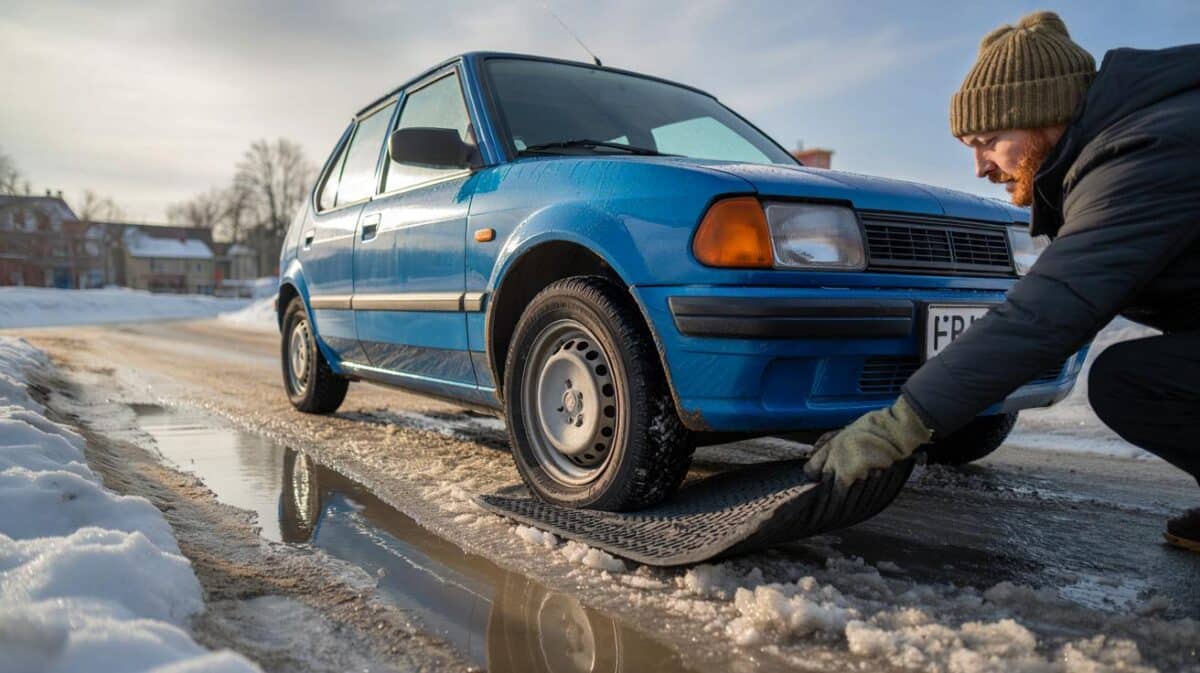
- Use a windshield cover or even a rubber bath mat overnight.
- Set the defroster low and steady; add A/C to dry the air faster.
- Plastic scraper only; no metal, no knives, no keys.
- De-icer spray, wait, then brush; resist the urge to rush.
- Fix chips early; they’re where cracks love to start.
Smart prevention beats frantic fixes
Prevention is not glamorous yet it saves money, time, and nerves in the months that test us. Swap in winter-grade washer fluid rated well below your coldest nights, and keep a spare in the trunk so the lines don’t choke with slush. Cover the windshield before storms, even if it’s just a cheap magnetized sheet that takes 20 seconds to lay down. **Start the defroster low and slow; heat the glass evenly.** Think “warm sunrise,” not “blowtorch on ice.”
There are gentle tricks for the triage mornings too. Fill a zip bag with lukewarm—not hot—water, seal it tight, and glide it lightly over the outside of the glass as a warm compress, never lingering in one spot. Use dedicated de-icer for locks and rubber seals, and a silicone-safe spray for door gaskets so doors don’t weld shut. **Never use boiling water, salt, or metal tools.** Salt chews finishes, hot water shocks glass, and metal leaves scars you’ll notice all year.
Some cars have heated windshields, and those tiny filaments do a lot with a little when you give them time. Remote start helps if you’ve got it, parked outside and legally allowed where you live. Even without gadgets, small habits add up: park out of the wind, point away from the weather, and keep that scraper within reach so you don’t improvise under pressure. The morning after a hard freeze doesn’t have to be a duel with physics; it can be a routine with guardrails.
The open road starts with a calm morning
Frosty mornings will keep arriving without apology, and they will tempt you with quick wins that don’t belong to you. There’s more grace in a covered windshield at midnight than in a kettle at dawn, more control in a low, steady defrost than in steam that bites back. The German promise—Nie mehr kratzen, no more scraping—feels like a dream, but it’s closer than it sounds when you trade drama for rhythm, panic for prep, and habit for hope. You’ll still see your breath in the air. You’ll also leave on time.
| Point clé | Détail | Intérêt pour le lecteur |
|---|---|---|
| Thermal shock breaks glass | Hot water expands the outer pane while the inner stays cold, piling stress at chips and edges | Avoid an expensive crack from a “quick fix” |
| Safe thaw routine | Low-and-slow defrost, de-icer spray, plastic scraper, and gentle strokes | Clear visibility fast without damage |
| Night-before prevention | Windshield cover, winter washer fluid, lifted wipers, fix chips early | Wake up to less ice and fewer headaches |
FAQ :
- Can warm water ever be safe on a frozen windshield?Lukewarm water in a sealed bag as a brief, moving compress is the least risky version, yet direct pouring is still a gamble. Safer tools—de-icer, cover, defroster—win every time.
- What temperature difference causes cracks?There’s no single magic number, but steep jumps of tens of degrees in seconds raise stress fast, especially on chipped or edge-bound glass. Big gradients and weak spots are the dangerous duo.
- Is it worse on side windows than the windshield?Side glass is often tempered and can shatter suddenly under thermal shock, while windshields are laminated and more likely to crack than explode. Both hate hot water on a freezing day.
- Will alcohol-based de-icer ruin paint or wipers?Isopropyl mixes are generally paint-safe when used as directed and wiped; avoid soaking rubber and never use acetone or harsh solvents. Store-bought formulas are designed for finishes and blades.
- How do I free frozen wipers without breaking them?Warm the glass from inside on low, spray de-icer at the blade edges, then gently lift once the bond loosens. A plastic trim tool helps; no prying with metal or brute force.