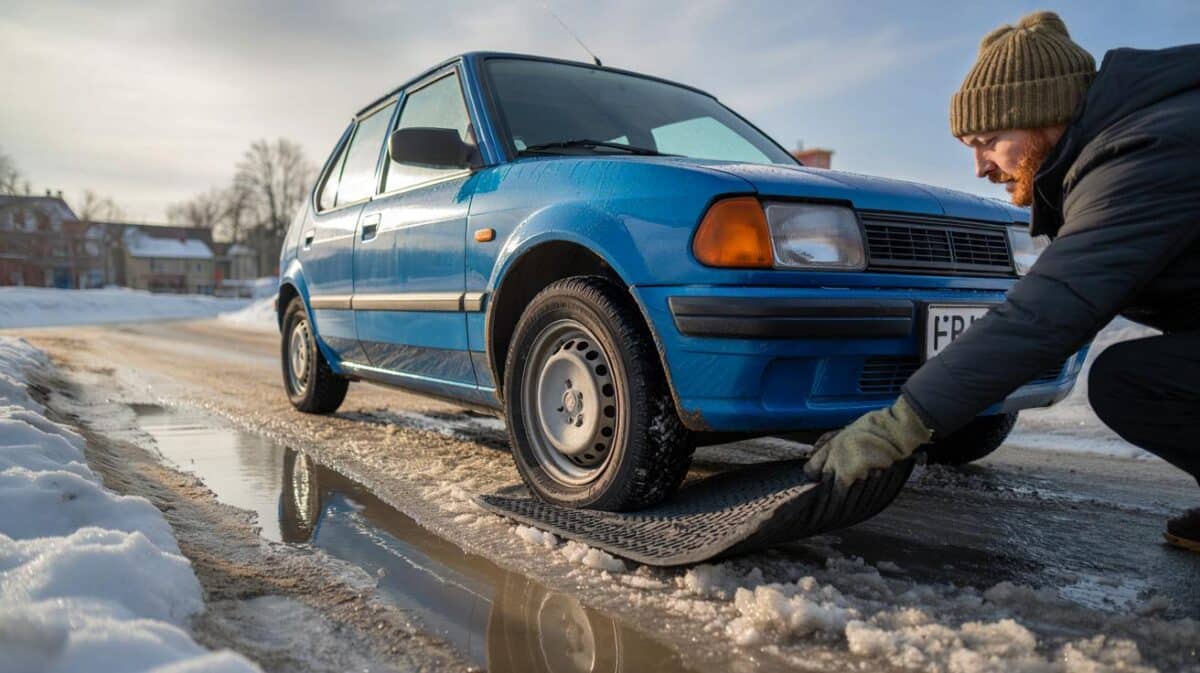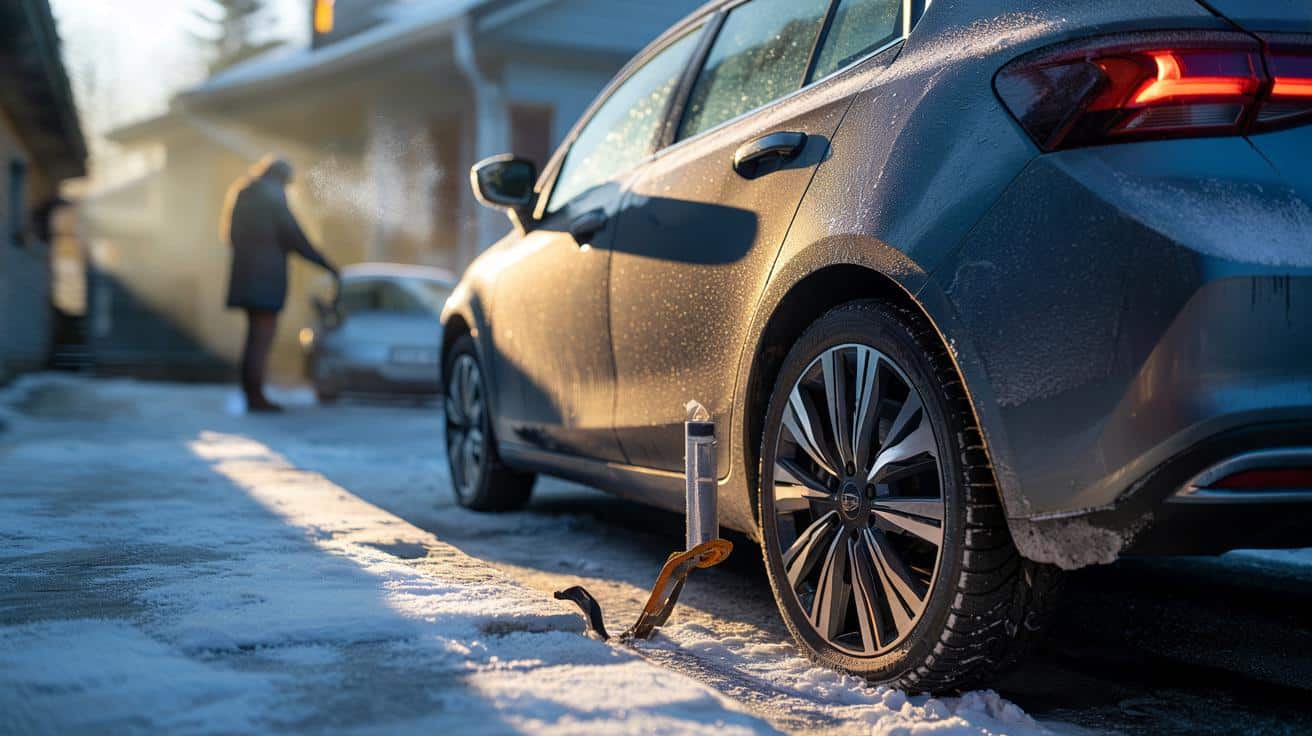
You step out, the sky the color of pewter, and the street a quiet rink. You pull the lever like you always do. It clicks, thunks, holds. Hours later, the temperature has dropped, the moon sits low, and your car is rimmed with lace. Morning comes, you slide into the seat, twist the key, and reach for the handbrake. It resists. Not stubborn—solid. A sigh rises in your throat as the coffee fogs the windshield and your to-do list starts marching in your head. You lift. Nothing. The lever won’t budge, and your right foot hovers, useless, above the brake. A neighbor is scraping ice, the sound like sandpaper on glass. He glances over, nods with the sympathy of someone who’s seen this before, then points at your rear wheels. They’re not going anywhere. You try again. Then again. The lever sips the cold and stays quiet.
Something simple has turned on you.
I watched a young family shuffle around their car, hats tugged down, mittens smacking doors. The dad gave the handbrake a confident pull the night before because that’s what you do on a slope. Now the rear drums had frozen shut, and their hatchback was a statue. He pressed the release button, jaw clenched. The lever moved, but the wheels didn’t. The kids stamped their feet, the world kept yawning awake, and the cold kept its grip.
Why the handbrake turns traitor in freezing weather
Moisture is the quiet villain here. It creeps into brake cables and collects on pads and discs, then the night flips the puddle to iron. On drum brakes, the shoes can fuse to the drum surface with a thin film of frost that behaves like glue. On discs, pads can “rust-bond” overnight with a flash of orange, then lock tighter once ice adds pressure. The lever didn’t break. The weather made it unkind.
Mechanics will tell you they see these calls every winter morning after the first real frost. A simple park on wet streets becomes an accidental clamp when the mercury plunges. **Most winter immobilizations start with a perfectly normal stop.** Even modern cars with electronic parking brakes aren’t immune when wet pads cool to freezing against a stationary disc. That gentle click at night can turn into a quiet refusal at dawn.
There’s logic in how it happens. Your brakes generate heat, which evaporates water—until you stop. Park right after driving through slush, and the warmed hardware steams inside a cold wheel well. As the car sits, humidity condenses again on the very surfaces you asked to hold, then freezes. On cable systems, moisture inside the sheath can harden and wedge the line so it won’t release. On electronic systems, the actuator may free, but the pads stay bonded to the disc. **Your handbrake didn’t fail; it froze.** That distinction matters when you’re choosing what to do next.
What to do instead: smart parking habits in the cold
Switch the habit on freezing nights. On a manual, leave the car in first gear or reverse, wheels turned toward a curb on slopes. On an automatic, use Park and let the transmission pawl hold, then add curb angle if you’re on an incline. If you’ve just splashed through slush or a car wash, skip the handbrake altogether until the brakes have dried with a short cooldown drive. One extra block with light braking can change the whole morning.
Before you park for the night, end your drive with a few gentle brake applications to scrub the discs dry. Not hard stops—just light, steady pressure at low speed. If you must apply the parking brake, use the minimum clicks needed, not a full yank. We’ve all had that moment where the hill looks steeper when the cabin is silent and your brain is tired. Let’s be honest: nobody really does that every day. Still, in deep cold, small tweaks pay you back at sunrise.
If your handbrake is already frozen, keep calm and try a sequence rather than a fight. Start the engine, let the cabin and wheel wells warm a bit, and nudge the car forward and back in gear while the brake is released. On electronic systems, cycle P to N to D with light foot-brake pressure to relieve load on the pads.
“Cold doesn’t break cars; water does—then cold makes it permanent,” says a tow operator who spends January mornings rescuing perfectly fine sedans.
- Manual: engage 1st or reverse, wheels to curb, skip the handbrake after slush or a wash.
- Automatic: Park plus curb angle; if frozen, idle 5–10 minutes, then gently rock.
- If you must use the parking brake: a few clicks only, not a full pull.
- EVs or regen-heavy hybrids: perform a couple of light, friction-brake stops before parking to dry the discs.
- Never power out of a stuck brake; you can glaze pads or snap a cable.
What’s really at stake—and why a tiny habit change feels big
One ritual at the end of the day becomes muscle memory. That’s why this topic ruffles feathers: it asks you to change a move you learned the week you learned to drive. There’s also the loud echo of good practice from warmer months. Using the parking brake keeps cables alive, prevents the pawl from wearing, makes sense on most days. Then winter arrives, and the same reflex can set a steel trap for your morning. *It feels almost personal, the way winter sneaks into the smallest gaps.*
There’s a broader rhythm here. Cities don’t plow side streets until midmorning. Apartment lots hold water where the drain clogs with leaves. You stop, you tug, you walk away, and the freeze does its quiet chemistry. People blame the car, the brand, the year, the last service, when the culprit is the thin film you can’t see. A different ending sequence—light braking, gear instead of lever, wheel toward the curb—turns the page without fanfare.
What’s worth sharing is not a rule, but an awareness. The handbrake isn’t wrong; the context changes. When you can, dry the friction surfaces, then let the drivetrain or the curb take the load. When you can’t, pull lightly and plan a gentler release in the morning. **Small acts avert big hassles.** That’s true in life as much as in a frozen parking bay with a coffee cooling on the dash and a lever that suddenly feels like a bar of iron.
| Point clé | Détail | Intérêt pour le lecteur |
|---|---|---|
| Why brakes freeze | Moisture on pads/discs and inside cables turns to ice; pads can rust-bond to discs overnight | Understand the cause, stop guessing, avoid damage |
| Smarter winter parking | Use gear/P, dry brakes with light stops, turn wheels to curb, minimal handbrake clicks | Quick routine change that prevents being stranded |
| If already stuck | Warm the car, gentle rocking, cycle gears on EPB, never power through a frozen brake | Safe, practical steps to leave on time without breaking parts |
FAQ :
- Should I never use the handbrake in winter?Not never—use it selectively. Skip it after slush or a wash, or on deep-freeze nights. On dry, clear, cold days, a light set is usually fine.
- Is it safe to rely on Park or leaving a manual in gear?Yes on level ground. On slopes, add a curb stop: turn the wheels toward the curb when facing downhill, away when uphill, so the car rests against it.
- What if my electronic parking brake won’t release?Start the car, hold the foot brake, and cycle the switch while shifting from P to N to D. Let the brakes warm a few minutes, then try again. Check the owner’s manual for a manual release procedure.
- Can I spray de-icer on the brakes?You can use a targeted de-icer on the cable entry points, but avoid soaking pads or discs with chemicals. Warmth and patience are kinder to friction materials.
- Will driving off with a stuck brake free it?It might, but it risks glazing pads, overheating, or snapping a cable. Better to warm, rock gently, and release slowly once the bond breaks.